


CNC machining cost calculation is very important when you want custom parts. You may have problems like:
Picking the material, which changes the price and how hard it is to machine
How long setup and running takes, mostly for tricky parts
Work for programming, checking, and making sure parts are good
Tools and fixing them, which make the total cost higher
A clear cnc machining cost calculation helps you plan your money and talk to suppliers. You need to collect things like material, part shape, and how many you need before you start cnc machining cost calculation. GooDa Machinery helps you with correct cnc machining cost calculation so you can get good prices.
Know what your part needs. Think about the size, shape, and what the part does. This helps you guess the cost better.
Find out what things cost. Look at material prices, how long machining takes, and how hard the part is to make. This helps you keep your spending under control.
Use a formula to figure out costs. Pick the best formula to split up costs. This helps you set fair prices for your project.
Make your design simpler. If your part is less complicated, it takes less time to make. This can save you money and make your project cheaper.
Work with people who know a lot. Experts like GooDa Machinery can help you make your design better. They can also help you spend less money.
First, you need to know what your part needs. This is the first step for cnc cost control. Think about how big your part is and what shape it has. You should also think about what the part will do. If your part has deep pockets or thin walls, it will take more time to make. Special tools may be needed for tricky shapes. These things make cnc machining take longer and cost more.
Tolerances are also very important. If you want very tight tolerances, you need better machines. You also need extra checks to make sure the part is right. This makes the cost go up.
Tolerances are a big reason why cnc machining costs more. If you want tighter tolerances, it takes more time and care. You also need to check the part more at every step.
You should only ask for tight tolerances if you really need them. This helps you keep costs down and stay on budget.
Next, you need to find all the things that change cnc machining cost. Here is a list to help you get ready:
Machine setup and programming
Machining time
Part complexity and tolerances
Post-processing and finishing
Order quantity
You should also think about how many parts you want. If you order more, you can split setup costs between all the parts. This makes each part cost less and helps you save money. Skilled workers, extra costs, and mistakes also matter. If your part is hard to make, you may need more workers and checks. This can make the total cost higher.
Now you can use a formula to find the machining cost. The formula shows where your money goes. It helps you set prices and see if you will make money. Here are some formulas people use for cnc machining:
Formula | Description |
|---|---|
Total Cost = Material Cost + (Machining Time × Hourly Rate) + Setup Costs + Post-Processing Costs | This formula adds up all the big costs. |
CNC Cost = (Material Cost + Machining Time × Hourly Rate + Setup Cost / Quantity) + Finishing + Inspection | This formula shows the cost for each part, including finishing and checking. |
Total Cost = Material Cost + Machining Cost + Setup Cost + Finishing Cost + Inspection Cost | This formula counts all the costs for cnc machining. |
The total Cost = Machine Hourly Rate x Machining Hours | This formula is simple and looks at machine time. |
Pick the formula that works best for your project. Good math gives you good cost guesses. This helps you control costs and set the right price. You can match your design with your budget. This makes your cnc project work better.
If you want to control costs, check your math and look at each thing that changes the price. This helps you not get surprised and set good prices. You can also use these steps to see if you will make money before you start making parts.
When you start a custom project, you should know what makes machining cost more or less. These things help you make good choices and keep your spending under control. GooDa Machinery uses smart machines and lots of experience to help you with these things.
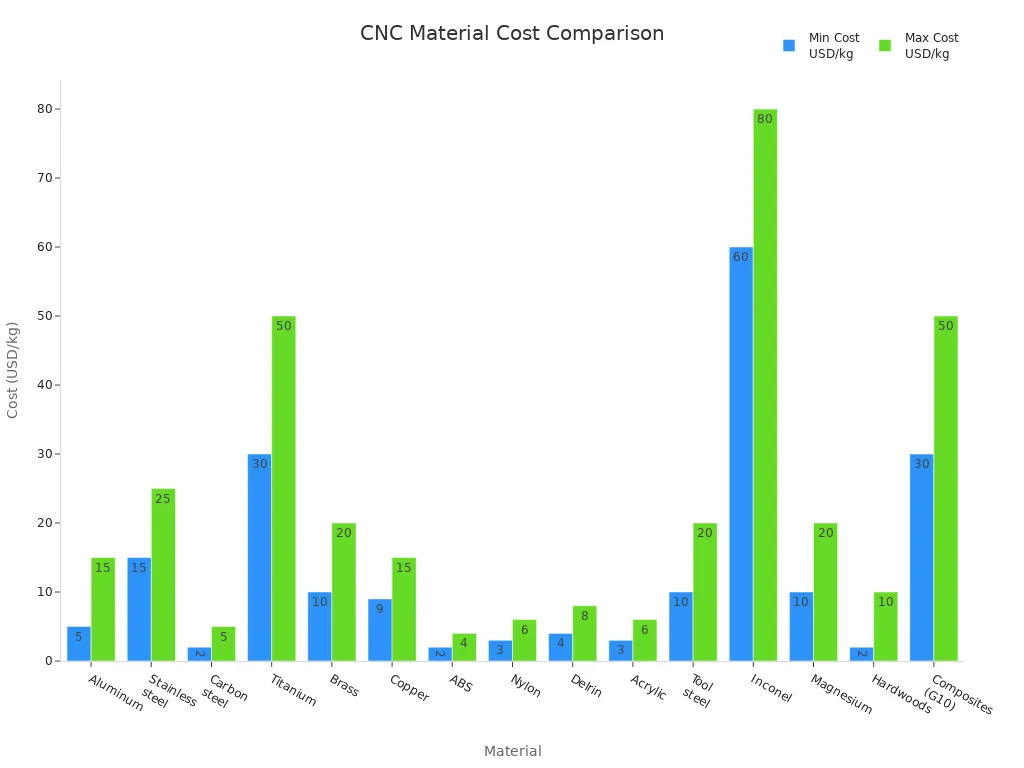
Picking the right material is a big part of the total cost. Some materials, like aluminum, are easy to cut and do not cost much. Others, like titanium or stainless steel, are harder to cut and cost more money. For example:
Steel is about $800 for one metric ton.
Titanium costs between $100 and $200 for each kilogram.
Aluminum for a simple 2 kg part costs $20 to $100.
If you pick a tough material, you might pay more for tools and time. The material you choose also changes how much finishing you need. If you use a material that is easy to finish, you can save money. GooDa Machinery has many CNC machines that can work with lots of materials, so you can find the best one for your job.
Tip: Keep an eye on raw material prices. They can go up or down fast and change your project cost.
Machining time means how long the machine works on your part. If it takes longer, you pay more. Parts with tricky shapes or tight tolerances take more time. The kind of machine also changes the price per hour. Here is a table that shows some common rates:
Machine Type | China / Asia | US / Europe |
|---|---|---|
3-Axis Mill / Lathe | $8–50/hr | $40–100/hr |
4-Axis | $20–70/hr | $75–120/hr |
5-Axis / Complex | $30–100+/hr | $100–250+/hr |
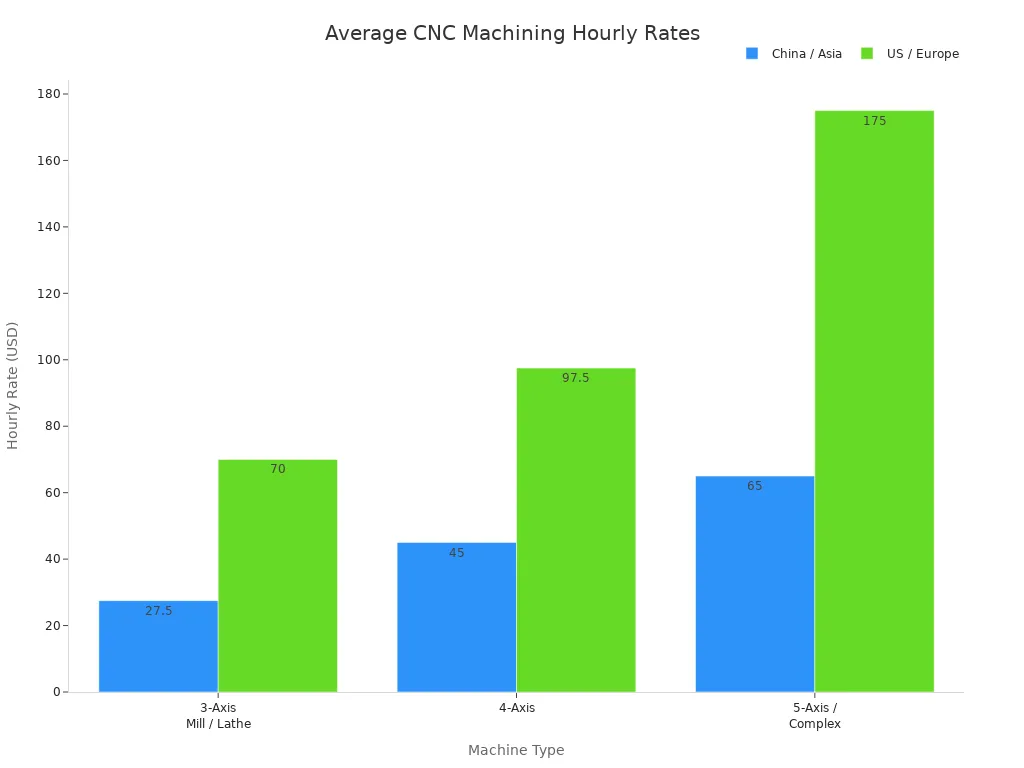
GooDa Machinery’s fast and accurate machines help cut down machining time. This means you get your parts faster and spend less money.
Labor costs are what you pay skilled workers and programmers. You need people to set up the machine, write the program, and check the parts. Good programming can save money by making fewer tool changes and speeding things up. Here is a table with usual setup and programming costs:
Part Complexity | Typical Cost Range |
|---|---|
Simple | $50–$150 |
Medium Complexity | $150–$500 |
High-Precision / Complex | $500–$2,000+ |
If your part is hard to make, you pay more for setup and programming. GooDa Machinery’s team uses smart software and lots of skill to keep these costs low and the quality high.
Tooling means the special tools and machines used to make your part. You might need drills, mills, lathes, or even custom tools. Tools wear out, especially when cutting hard stuff like titanium. You also have to pay for regular machine care to keep things working well.
Special tools can cost a lot.
Worn-out tools and new ones add to your bill.
Regular care stops breakdowns and keeps parts correct.
GooDa Machinery uses strong tools and checks machines often. This helps you avoid extra costs and delays.
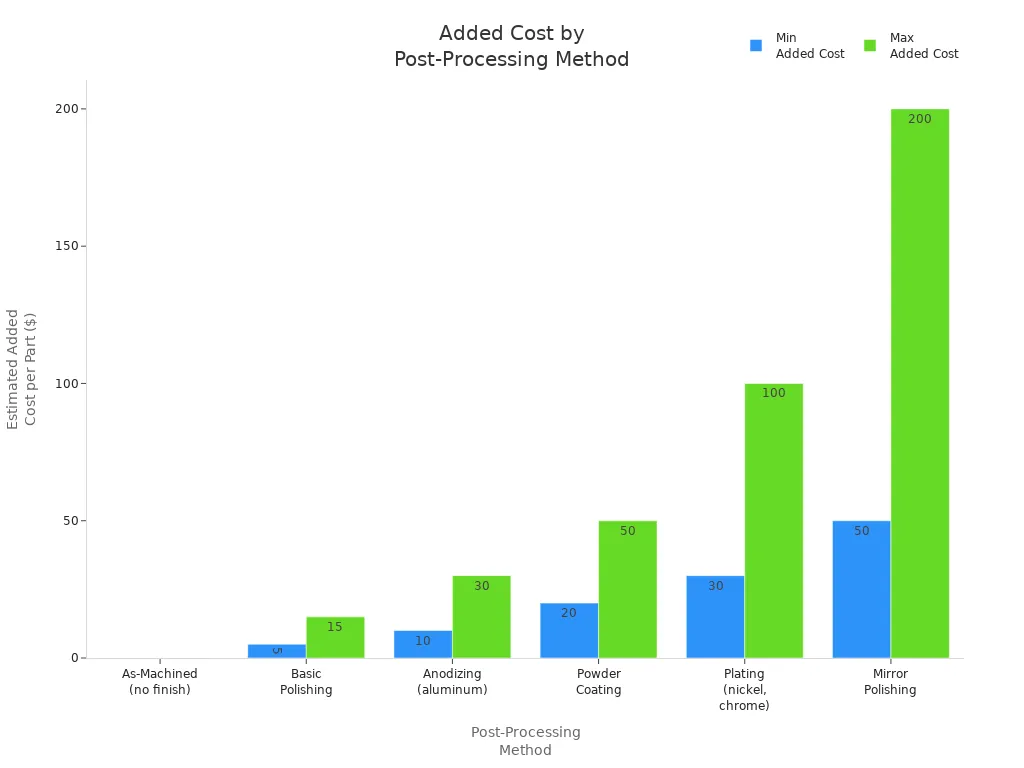
After machining, your part might need extra steps like polishing, painting, or coating. These finishing steps make your part look and work better, but they cost more. Here is a table with common finishing costs:
Post-Processing Method | Estimated Added Cost per Part |
|---|---|
As-Machined (no finish) | $0 (included) |
Basic Polishing / Deburring | $5 – $15 |
Anodizing (for aluminum) | $10 – $30 |
Powder Coating / Painting | $20 – $50 |
Plating (e.g., nickel, chrome) | $30 – $100 |
Mirror Polishing / High-End | $50 – $200+ |
You also need to think about packing and shipping. Big or breakable parts cost more to pack and send. How far your parts travel also changes the shipping price. GooDa Machinery packs parts carefully and ships them safely so they arrive in good shape.
Note: Each of these things can change your total cost. If you know about them, you can plan better and not get surprised.
A cnc machining cost calculator helps you guess your project cost fast. This tool lets you see how your choices change the total price. Most calculators want you to type in details about your part and project. Here is what you do:
Get your part drawings and all the details ready.
Type in the part size, material, and how many you need.
Pick the tolerances and surface finish you want.
Add any special shapes or features your part has.
Look at the cost summary for each section.
A good cnc machining cost calculator has these things:
Feature | Description |
|---|---|
Machining Time | Tells you how long the machine works on your part. |
Setup Costs | Shows the price for programming and setting up the machine. |
Material Costs | Counts the cost by part size and material type. |
Finishing Costs | Adds the price for things like anodizing or polishing. |
Tolerances | Changes the cost if you need tighter requirements. |
Part Complexity | Adds time for parts with tricky designs. |
Order Quantity | Splits setup costs over more parts to save money. |
Tip: You can use online tools or Excel sheets to test ideas and compare designs.
Here is an example using GooDa Machinery’s help. You want to make 50 aluminum brackets for electronics. The cnc machining cost calculator shows the costs like this:
Cost Component | Description | Estimated Cost (USD) |
|---|---|---|
Material Cost | 50 brackets, aluminum ($10 each) | $500 |
Machining Cost | Simple shape, short machining time | $400 |
Setup Cost | One-time programming and setup | $150 |
Finishing Cost | Basic deburring ($5 per part) | $250 |
Inspection Cost | Standard quality checks | $100 |
Total Cost | $1,400 |
You can see how your choices change the total cost. If you order more, the setup cost for each part gets lower. If you pick a pricier material, the material cost goes up. GooDa Machinery’s team helps you put in the right numbers for the best estimate.
Note: Always check your numbers and ask for help if you need a special process or material.
You can save money by making your design simple. Removing extra features helps you spend less time and money. Complex shapes need more machine work and special tools. Keeping wall thickness and pocket depth the same makes things faster. Use tight tolerances only where needed. More precision means better machines and more checks. Too many tight tolerances can make your project cost more. Try to balance how your part works and how much it costs.
Engineers pick tight tolerances for safety, but this costs more.
Special features slow down the process and need more checks.
Simple designs make production easier and quicker.
Picking the right material can help your budget. Some materials are easier to cut and cost less. For example, 6061 aluminum is strong and easy to machine. It also saves time on programming and avoids mistakes. Stainless steel 304 works well and does not need extra heat treatment, which saves money. The table below shows how much different materials cost:
Material | Cost per Pound (USD) | Cost Savings Compared to Other Materials |
|---|---|---|
Al 6061 | $2.25 | 53% savings compared to Al 7075 |
Al 7075 | $4.75 | N/A |
Carbon Steel | $1.00 | N/A |
SS 304 | $1.43 | 24% savings compared to SS 316 |
SS 316 | $1.88 | N/A |
Brass | $4.00 | N/A |
Titanium | $7.50 | N/A |
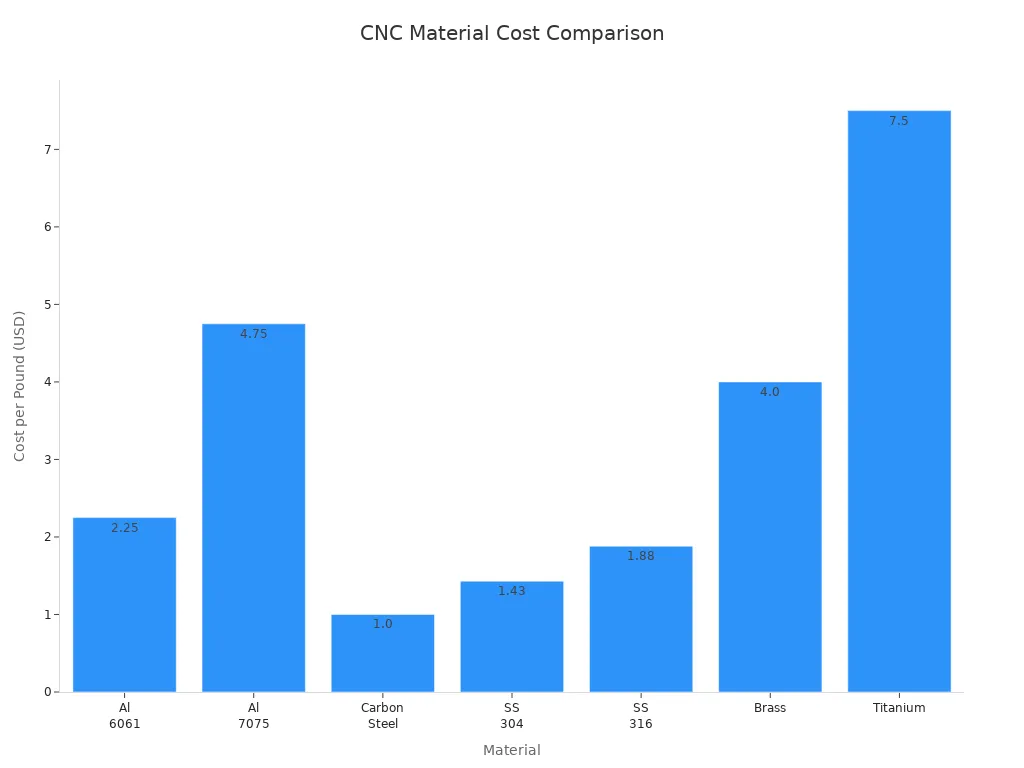
Pick materials that fit your needs and help make the process easier.
Working with GooDa Machinery early can help you get better results. Their experts help you make your design and process simpler. They look at material choice, design complexity, and tolerances. They suggest ways to make setups easier and reduce handling time. This teamwork makes production faster and costs lower. You get advice on how to save money before you start making parts.
Tip: Working together early helps you avoid expensive changes later.
Ordering more parts at once can make each part cheaper. When you buy in bigger batches, setup and programming costs are shared. This lowers the price for each part. The table below shows the benefits:
Evidence Description | Key Insight |
|---|---|
Material savings through near-net-shape material | Reduces waste and cost per finished piece |
Machine time cost per part | Lower per-part costs as quantity increases |
Amortization of programming costs | Fixed costs spread over more units |
Fixed costs absorption in single vs. batch orders | Single units bear all setup costs; batches reduce unit price |
You save the most when you go from single parts to small batches. As you order more, the price per part drops, but savings slow down after a while. Always think about how many parts you need when planning your order.
You can manage your project money better if you know what affects the cost. Using a step-by-step method for cnc machining cost calculation helps a lot. A cnc machining cost estimator looks at machine type, part complexity, labor, material, and overhead. This tool helps you guess costs and change your plan if needed.
GooDa Machinery gives you expert help and good estimates. Their team shows you how to make your design and process cheaper.
To begin, do these things:
Make clear drawings and list the materials you need.
Write down how precise and what surface finish you want.
Say how many parts you need.
Talk to GooDa Machinery to check their skills and share your project.
Use these steps to get good results. Ask GooDa Machinery for a special quote for your project.
You should give part drawings, material type, quantity, and any special finishes. Clear details help you get a fast and accurate quote.
Complex parts take more time to machine. You may need special tools or extra checks. Simple shapes usually cost less.
Yes. Ordering more parts at once spreads setup costs over many pieces. This lowers the price for each part.
You should look for experience, machine quality, and good support. GooDa Machinery offers advanced cnc solutions and expert advice for your projects.