


Choosing a CNC machining center is a big decision. Six main types are common: vertical, horizontal, 5-axis, turning centers, EDM, and grinding machines. Each one has its own job and its own strengths.
This guide covers the differences, benefits, and best uses for each type. You will see how CNC machine types change your production results. Knowing the basics of CNC machining helps you pick the right machine for your parts.
By the end, you will have a simple way to choose. You will know which machine fits your budget, volume, and tolerance needs. This turns a hard buying choice into a confident, smart decision.
CNC machining centers come in six main types: vertical, horizontal, 5-axis, turning, EDM, and grinding.
Vertical machining centers work best for flat parts, molds, and dies.
Horizontal machining centers are great for making many prismatic parts at once.
5-axis machines need fewer setups and can shape tricky parts with great accuracy.
Turning centers work best for round parts and can add live-tooling to do milling too.
EDM and grinding work on hard materials and meet tight tolerances that milling can't reach.
Pick a machine by thinking about how complex the part is, what material it uses, how many you need, and what you can spend.
Automation can raise machine use by 30-60% and pay back in 2-10 months.
A CNC machining center is a machine run by a computer. It can do many jobs in one setup. This is different from simpler CNC machines like a standard mill or lathe. Those often handle just one type of job. A machining center can mill, drill, tap, and bore holes. You get a full part in fewer steps. This cuts down on handling and mistakes. Companies like GooDa Machinery offer many of these centers. They build machines for different needs, from simple molds to complex aerospace parts.
CNC technology powers modern manufacturing. Machines can run all day and night without getting tired. This raises production speed and output. Every part matches the next one exactly because the computer controls each move. You waste less material and fix fewer parts. The upfront cost is higher, but long-term costs go down. For example, one optimization method allows cutting speeds up to 600 percent faster. This can lead to big energy savings and higher profits across the industry.
MillMax optimization enables cutting speeds up to 600 percent faster, significantly lower energy consumption, and an estimated $750 million in potential annual profit gains industry wide.
The consistency of CNC machining matters for manufacturing. You make identical parts over thousands of cycles. This meets strict quality standards. Production speed goes up, quality stays steady, and costs improve. You can also add robots to speed up processes and cut labor costs. Low-volume work with heavy lifting becomes faster and more flexible. These benefits make computer numerical control essential for modern production.
Machines are grouped by how many axes they move. An axis is a direction of motion. The first axis is the X axis. The second is the Y axis. The third is the Z axis. These three axes define straight-line movement. A 3-axis machine cuts flat surfaces and simple shapes. A fourth axis adds rotation. A fifth axis adds tilting. A 5-axis machine has five axes of motion. Each axis adds more ability. The more axes you have, the more complex parts you can make. This is called multiaxis machining. It reduces setups and boosts accuracy. This guide covers the most common types of CNC machines. We will focus on vertical, horizontal, and 5-axis centers. But you also need to know about simpler machines. CNC drilling machines often use only two or three axes. They drill holes in exact spots. The axis count decides what the machine can do. Understanding the axis setup helps you pick the right machine.
Beyond the common machining centers, there are specialized machines. EDM uses electrical discharge to cut hard metals. Grinding machines achieve very tight tolerances. CNC drilling machines focus on making holes. Turning centers spin the workpiece instead of the tool. These are all part of the broader types of CNC machining processes. Each has its own use. We will cover each type in more detail later in this guide. Knowing the different types of CNC machines helps you match the machine to your part. GooDa Machinery offers a wide range of these solutions, including those for mold and die work. Whether you need a vertical machining center or a specialized EDM, understanding the basics gives you confidence.
A vertical machining center has a spindle that points straight down. The spindle holds the cutting tool. It moves up and down on the Z axis. The table moves on the X and Y axes. This gives you three axes of motion. This design is the most common type of CNC machining center. You see it in many shops. The vertical setup is good for flat surfaces. Gravity helps pull chips away from the workpiece. You can load and unload parts easily. The operator can see the cutting process clearly. This makes setup and inspection simpler. Many manufacturers use these machines for daily work. GooDa Machinery builds vertical machining centers for high precision work. These machines handle many tasks in one setup. The three-axis setup handles most jobs. You can mill, drill, and tap with one setup. This saves time and reduces errors. CNC technology powers these machines. Each axis moves by itself for exact positioning.
Vertical machining centers are great for mold and die work. You need flat surfaces and accurate cavities. The vertical spindle gives you direct access to the top of the workpiece. This is perfect for dies and molds. The precision of these machines is key for mold making. You need tight tolerances for matching mold halves.
In-cycle probing for mold and die work lets the machine adjust for thermal growth of axes. This is the difference between holding tolerance through a 12-hour unattended run and drifting outside it.
Think about thermal effects on your parts. A 12-inch steel mold block grows about 0.0007 inches for every 10°F temperature change. Your target tolerance for critical features is from ±0.0001 inches to ±0.0005 inches. An example tolerance is ±0.0003 inches. Without compensation, you can drift outside your tolerance range. The probing system measures the actual position and adjusts the toolpath. This keeps your parts in spec. GooDa's machining centers use this technology for steady results. You get reliable accuracy over long runs. The CNC machining process becomes more stable with this feedback. You can trust the machine for unattended work. The probing system checks the axis position during the cycle.
You can use vertical machining centers for many industries. The table below shows common uses.
Industry | Specific Parts |
|---|---|
Aerospace | Turbine blades, structural parts (titanium/stainless steel) |
Automotive & Mold Making | Aluminum molds, core/cavity inserts, graphite electrodes |
Medical Device | Complex 3D shapes with tight blends and repeatable finishes |
Electronics & Semiconductor | Precision parts for semiconductor manufacturing tools |
Prototype & Development | Short-run, single-piece jobs |
These are real-world uses of CNC machines. You also see these machines in automotive work for engine brackets, housings, and covers. Aerospace companies use them for structural parts and precision housings. Medical device makers rely on them for surgical tools and orthopedic implants. Industrial machinery shops use them for plates, blocks, and tooling fixtures. Electronics companies use them for precision-machined cases and housings. The vertical machining center handles flat parts and complex shapes. You can use it for CNC milling, drilling, and tapping. The three-axis design gives you enough movement for most jobs. You can also add a rotary axis for more complex parts. You might use CNC drilling machines for simple hole patterns. But a VMC gives you more flexibility. You can cut, drill, and finish in one setup. This saves time and improves accuracy. CNC milling machines like VMCs are the workhorses of modern shops. CNC milling machines handle many part types. CNC gives you reliable results. You get high precision with every cycle. The cutting process stays steady across many parts.
A horizontal machining center has its spindle parallel to the floor. The cutting tool goes into the workpiece from the side, not from above. This setup changes how the machine handles material and chips. The table moves along the X and Y axes while the spindle moves along the Z axis. Many HMCs also have a rotary B axis. That fourth axis lets the table rotate the part to reach multiple faces. You can machine four sides of a prismatic part without clamping it again. This design cuts down on manual handling and boosts accuracy. Each axis moves with exact control under computer control. The CNC machining center runs complex sequences on its own. You program the tool paths once, and the machine repeats them exactly. This consistency is important for repeat jobs and tight tolerances.
Getting rid of chips is the biggest benefit of an HMC. Gravity pulls chips down and away from the cutting area. In a vertical machine, chips can pack into deep pockets and holes. That packing causes recutting, which damages tools and slows cutting. An HMC avoids this problem. Chips fall freely onto a conveyor below the work area. This keeps the tool clean and the workpiece cool. You get better surface finishes and longer tool life. The workflow improves because you spend less time stopping to clear chips. You also cut down on chip-related stoppages during heavy roughing. Multi-face access via the rotary table cuts down on the need to clamp again by hand. You combine operations and reduce work-in-process movement between machines. This means fewer setups per batch and less handling. You can measure these gains by setup hours per batch, number of re-clamps, and spindle use. These numbers show real improvements in efficiency.
Horizontal machining centers do very well in high-volume production. They fit prismatic parts—parts with flat sides and square shapes. Automotive and electronics industries use them a lot. You see them making engine blocks, transmission housings, valve bodies, and electronic enclosures. These parts need multiple faces machined in one setup. The rotary B axis makes this possible. You also get automation options. Many HMCs accept pallet changers and tombstone fixtures. A tombstone holds multiple parts on each face. You load parts on one pallet while the spindle cuts parts on another. This increases unattended hours and cuts down on loading time. The spindle stays busy while you prepare the next batch. This boosts production output a lot. For real-world uses of CNC machines, HMCs handle the heavy lifting. They give strong process consistency for repeat jobs. You get the same quality part every cycle. While CNC drilling machines handle simple hole patterns, an HMC does much more. It mills, drills, taps, and bores in one setup. This makes it a versatile workhorse. The CNC milling machines in this class handle deep cuts and heavy material removal. You can run them for long stretches without constant supervision. This makes them ideal for large orders and tight deadlines. When you need high volume and consistent quality, an HMC delivers. The CNC machining process becomes more efficient and predictable. You cut labor costs and increase throughput. This machine type pays for itself in the right application. Think about your part shape and volume before choosing. If you machine prismatic parts in large amounts, an HMC is the right fit. The investment in automation pays off through less non-cut time and higher output.
A 5-axis CNC machining center has two rotating parts plus the three straight-line moves of a normal machine. The first way is called 3+2 machining. You turn the workpiece to a set angle. Then you cut using the three straight axes while each rotating axis stays still. The rotating axis that locks stays in place during 3+2 cutting. Each machine axis moves by itself under computer control. This is called positional 5-axis machining. You use it to reach hard angles on many sides of the part. The second way is full simultaneous 5-axis machining. All five axes move while cutting. The tool tilts and spins as it follows the path. This makes complex surfaces and undercuts that a 3+2 setup cannot get to. The choice depends on your part shape. Flat faces and angled holes work well with 3+2. Curved surfaces need simultaneous motion. Each way serves a different need. The key is matching the axis setup to your parts.
Cutting down on setups is the biggest plus of CNC machining. A part that needs five setups on a 3-axis machine can be done in one setup on a 5-axis machine. You get rid of errors from re-clamping. Every feature uses the same starting point. This makes accuracy better for complex shapes. You also save hours of manual handling time. GooDa Machinery offers advanced 5-axis solutions for high-end mold making. Their machines handle deep cavities and steep wall angles. The multiaxis ability lets you reach areas that a normal machine cannot get to. You combine multiaxis CNC machining with strong build for reliable results. The cutting tool stays in constant contact with the workpiece. CNC milling action stays smooth and steady. The Z axis moves up and down during the cycle. You can also use a 5-axis CNC machine to replace multiple CNC drilling machines for parts with angled holes. Each hole is drilled at the correct compound angle in one program. This is how 5-axis CNC machines improve workflow efficiency.
Aerospace and medical industries need high precision and complex shapes. A 5-axis CNC machine handles these needs. CNC milling machines are common in aerospace shops for this kind of work. You can machine turbine blades with smooth airflow surfaces. The simultaneous movement of each axis creates the twist and taper needed for aerodynamic efficiency. The B axis rotates the workpiece to reach multiple faces. The C axis gives extra rotation for complex shapes. Structural brackets and spars benefit from single-setup production. You remove material from many sides without moving the part again. This saves time and keeps tight tolerances. Engine casings need precise bore geometry and angled mounting faces. A 5-axis machining center finishes these features in one program. The table below shows common aerospace parts and why they are made this way.
Component | Manufacturing Rationale |
|---|---|
Structural frames and spars | Designed with aggressive pocket removal in 7075/7050 aluminum or titanium to get the best stiffness-to-weight ratio; thin walls and deep cavities are reliably made in a single 5-axis setup. |
Engine casings | Need precise bore geometry, angled mounting faces, complex external profiles, and through-features at compound angles; 5-axis design is driven by accuracy and stiffness needs under extreme heat and force. |
Medical devices also rely on 5-axis machining. You make implants with complex curves that match patient anatomy. The simultaneous motion of the tool axis lets you cut titanium and cobalt-chrome alloys with tight tolerances. Surgical instruments need smooth finishes and exact sizes. These 5-axis CNC machines give consistent results every cycle. These are real-world uses of CNC machines in demanding industries. You see CNC milling machines and 5-axis machining centers in aerospace, medical, and mold making shops. 5-axis machining centers are the standard for complex part work. The investment pays off through fewer setups and steady quality. You get better results and shorter lead times for complex parts.
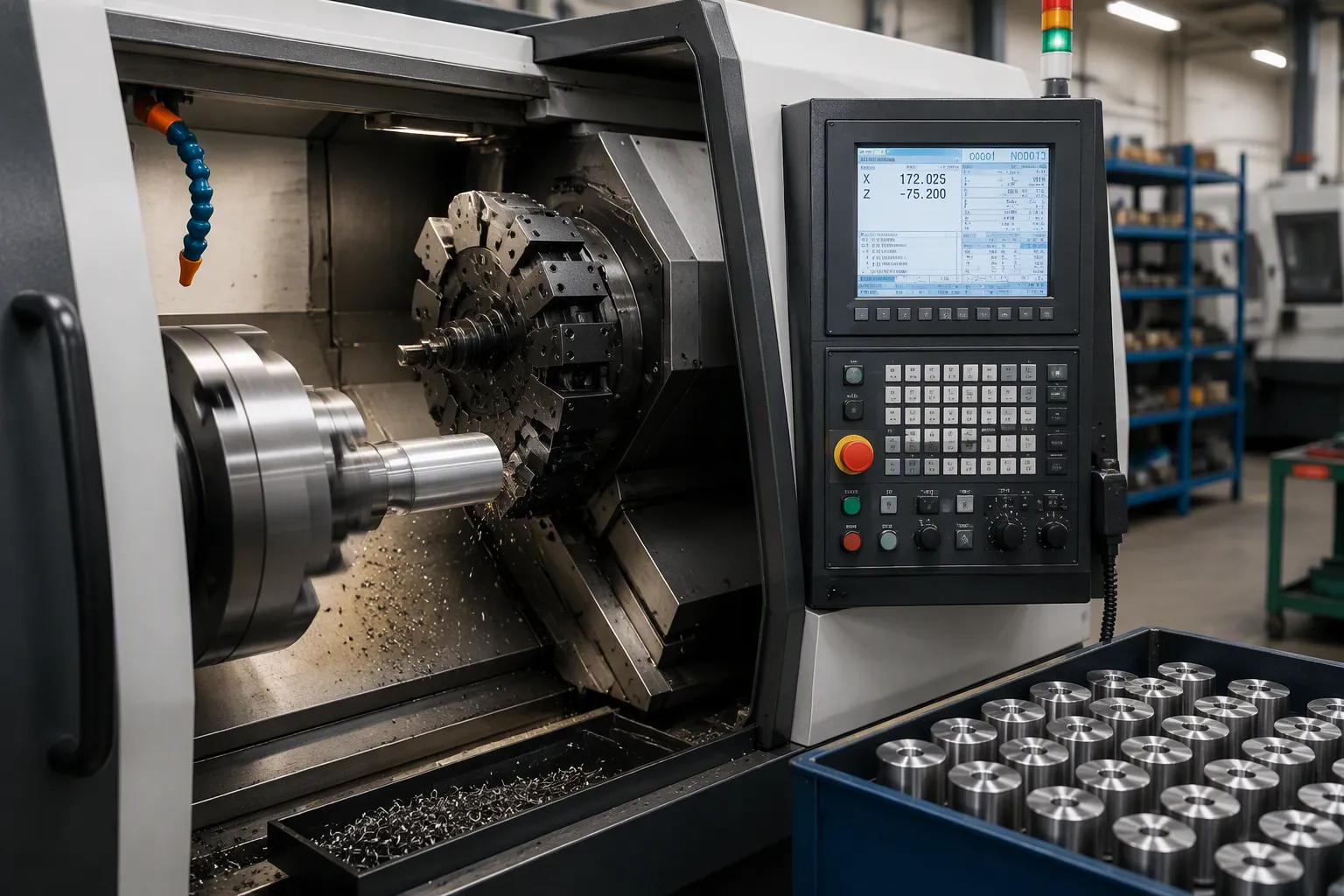
Turning centers spin the workpiece, not the tool. That is the main difference from CNC milling machines. You use them for round parts like shafts, rods, and bushings. The global market shows how important they are. In 2023, the combined market for machining centers and turning centers hit USD 25.9 billion. Machining centers took 61.6% of that share. Turning centers took 38.4%. That means turning centers had an implied market size of about USD 9.95 billion. Machining centers handle more complex parts. Turning centers focus on round work for industries like oil and gas.
A basic turning center has two main axes. The X axis moves the tool side to side. The Z axis moves the tool along the workpiece length. The workpiece spins on a spindle. The cutting tool removes material from the outside. You can bore holes, face ends, and cut threads. The process is fast and simple. You get round parts with tight tolerances. CNC lathe machines do these operations automatically. You program the dimensions once. The machine repeats them exactly. This makes turning centers great for high-volume production of round parts. The setup is quick. The cycle time is short. You run many parts with little supervision. CNC lathe machines are workhorses for cylindrical parts.
Modern turning centers have improved. They now include live-tooling. Live-tooling lets the machine mill and drill without removing the workpiece. You can mill flat surfaces. You can drill cross holes. You can cut keyways. The workpiece stays in the same setup. This keeps the datum. It removes errors from moving parts between machines. You save time and boost accuracy. Multi-spindle turning centers go further. They have two or more spindles that work at the same time. The main spindle machines one part. The sub-spindle machines another. You can also move a part from the main spindle to the sub-spindle. This lets you machine the back side. Complex parts finish in one cycle. GooDa Machinery offers turning centers with live-tooling and multi-spindle features. Their MD120 model is a twin-spindle automated turning center. It has live tooling in all turret positions and C-axis control. The C axis adds rotational control of the spindle. This gives you an extra axis for complex milling operations. The MD200 model supports drilling and milling in a single setup. These machines cut labor costs. They support flexible production planning. The table below shows the productivity gains from live-tooling.
Productivity Improvement | How Live-Tooling Achieves It |
|---|---|
Faster Fabrication | Uses advanced gears and bearings to increase CNC machining rates, cutting production time. |
Datum Preservation | Keeps the datum during machining, removing data loss risks from moving parts between machines. |
More Accurate Machining | Lowers the number of lathe tools used, reducing human error and ensuring high-quality precision. |
Multipurpose Capability | Does turning, milling, drilling, and other metal-cutting tasks in a single setup. |
Greater Design Flexibility | Allows multiple operations in one run, enabling creation of more complex geometries. |
Turning centers work best for round or cylindrical parts. Common examples include shafts, rods, pins, bushings, and sleeves. You also see them for threaded parts and fasteners. The oil and gas industry uses turning centers for valve parts and fittings. Construction equipment relies on turned parts for hydraulic cylinders and pins. CNC lathe machines handle these parts well. You get steady quality across large batches. Simple parts like bolts and spacers are easy to make. Complex parts like stepped shafts and threaded couplings also work well. The key is the round shape. If your part has a cylindrical profile, a turning center is the right pick. You can also use CNC drilling machines for simple hole patterns. But turning centers give you more ability. They combine turning, milling, and drilling in one machine. This lowers the number of machines you need. It cuts down on handling. CNC lathe machines are vital for any shop that makes round parts. They are reliable, fast, and accurate. You depend on them for high-volume production of cylindrical parts.
Not every part works well on a milling machine. Some materials are too hard. Some shapes are too complex. For those jobs, you need special equipment. Electrical discharge machining (EDM) and grinding centers handle these tasks. They do work that regular cutting tools cannot do. You often find them in tooling and mold shops. They are less common than machining centers, but they are essential for certain jobs.
EDM removes material with electrical sparks, not cutting tools. The machine wears away the workpiece through controlled sparks. The material must conduct electricity for this to work. Two main types exist: sinker EDM and wire EDM. Each one has a different job.
Sinker EDM uses a shaped electrode that moves down into the workpiece. The electrode makes a mirror copy of its shape. This method works great for complex 3D cavities, molds, and dies. You can cut sharp inside corners, deep ribs, and blind cavities. The electrode mostly moves along the Z axis. It uses hydrocarbon oil as the dielectric fluid. Wire EDM, on the other hand, uses a thin wire as the electrode. The wire cuts through the material like a bandsaw. It mostly moves along the X and Y axes. This method suits thick plates, punches, and extrusion dies. You cannot cut blind features with wire EDM. The wire must go all the way through the workpiece. It uses deionized water as the dielectric fluid.
Feature | Sinker EDM | Wire EDM |
|---|---|---|
Primary Use | Complex 3D cavities, molds, dies | Cutting thick plates, punches, dies |
Capability | Blind features (holes, cavities) | No blind recessed features |
Movement | Principally Z-axis | Principally X and Y axes |
Dielectric | Hydrocarbon oil | Deionized water |
Ideal For | Tooling, molds, dies | Tooling, punches, dies |
Grinding hits tolerances that milling cannot reach. A grinding wheel removes tiny bits of material with each pass. This process gives you excellent surface finishes and exact sizes. You use cnc grinding machines when you need mirror-like surfaces. Regular turning and milling leave surface finishes between 0.4 and 1.6 μm Ra. Grinding brings that number below 0.1 μm Ra. Some cnc grinding machines reach values as low as 0.05 μm. That is an optical-grade finish. Dimensional accuracy reaches ±0.001 mm, which matches IT5 grade. You depend on cnc grinding machines for precision finishing of hardened parts. You also use them for tight-tolerance parts in aerospace and medical fields. The process removes material slowly and steadily. This stops heat damage and surface cracks. You get the same results across every part in the batch. The high precision of cnc grinding machines makes them vital for tooling work. You cannot get this level of accuracy with standard milling equipment.
You might ask when to pick EDM or grinding over a standard machining center. The answer depends on material hardness and part shape. Traditional milling struggles with hardened tool steels. The cutting tools wear out fast and break often. EDM handles these materials without touching them. The sparks wear away the metal no matter how hard it is. You also skip the cost of special tooling. EDM removes the need for special tooling, saving both money and delivery time. Skimming passes remove the need for extra finishing steps. Laminate layering lets you cut multiple parts at once. Cut pieces can be reused instead of becoming waste chips. The process finishes the final shape in one setup. This avoids many routine steps and improves accuracy.
Cost Factor | EDM | |
|---|---|---|
Initial tooling | Higher | Lower |
Consumables | Lower | Higher (electrode wear, dielectric fluids) |
Volume suitability | Ideal for long runs | Pricier per part in volume |
Best application | Softer materials, simpler geometry, high volume | Hardened metals, challenging geometry, conductive materials |
You pick cnc grinding machines when surface finish and tolerance matter more than speed. You pick EDM when the material is too hard or the cavity too complex for cutting tools. Both methods cost more per part in volume. But they give results that traditional milling cannot match. For tooling and mold work, these specialized machines are worth the cost.
You now know the main types of CNC machines. The next step is to pick a machine that fits your work. No one machine is best for every job. The right choice depends on your parts, materials, how many you make, and your budget. This section gives you a simple way to choose the right CNC machine. You will compare your needs with what each machine can do. Then you can make a smart buying choice.
Start by looking at your part shapes. Simple parts with flat surfaces and straight holes work well on 3-axis machines. These machines cost less per hour and use simple fixtures. You get steady, repeatable results for basic shapes. Parts with features on many sides need a 4-axis machine. The rotary axis cuts down on setups without needing the full power of a 5-axis. Tight tolerances and complex curves push you toward 5-axis machines. Fewer setups reduce tolerance buildup and improve surface quality. Very complex or high-value parts make the 5-axis cost worth it.
The main problem with 3-axis machining is angled features. You need many setups to reach compound angles. Each setup adds differences between cuts. In contrast, 5-axis machining gives you non-stop tool access to almost any surface angle. You finish the whole part in one setup. This keeps the relationships between features the same and reduces errors. Choose 5-axis when your parts have undercuts, compound angles, or curved surfaces. Also choose it when accuracy between faces must stay the same within one coordinate system. For simple shapes, 3-axis machines still have a clear cost advantage. For complex parts, 5-axis often lowers cost per part by removing extra setups and fixtures. You also cut down on handling, fixing, checking, and alignment time. The right economic choice depends on your part mix and tolerance needs, not just the machine price.
Part Complexity Level | Recommended Machine | Rationale |
|---|---|---|
Simple geometry, high volume | 3-Axis | Lower machine rates, simpler fixturing, stable processes |
Features on multiple sides or cylinders | 4-Axis | Reduces setups without full 5-axis complexity |
Tight tolerances and complex contours | 5-Axis | Fewer setups minimize tolerance stack-up and improve surface quality |
Extreme geometries or high-value parts | 5-Axis | Higher yield on challenging features despite upfront costs |
Your part material decides the spindle and power you need. Metals like steel and titanium need a strong spindle with high cutting force. Aluminum or copper can run on a lighter machine with less power. Spindle speed and power are important for turning the cutting tool or holding the workpiece. Strong spindles handle harder materials and tougher cuts. Work area size also matters. On a lathe, check the swing over the bed and the distance between centers. On a mill, check the table size, weight limit, travel, and capacity. These details prevent limits on your projects later.
Precision and accuracy needs shape your choice. Look at the machine's tolerance ability. Tight tolerances and high accuracy cut down on waste and rework. You get the same quality on every part. For titanium alloys, standard machining holds ±0.1 mm for general shape. The normal range across milling, turning, and drilling is ±0.13 mm. Tight functional tolerances reach ±0.025 mm where the part needs it. Extreme special projects hit ±0.0127 mm, but they need thermal stability and careful measurement planning. A typical case study shows ±0.1 mm for most features and ±0.05 mm on critical surfaces. You only tighten where the part function needs it. This approach balances cost and quality.
Tolerance Level | Value | Application Context |
|---|---|---|
Baseline (standard) | ±0.1 mm | General geometry for metals, including titanium |
Process norm | ±0.13 mm (±0.005") | Typical across milling, turning, drilling |
Tight (functional) | ±0.025 mm (±0.001") | Only where function demands it |
Extreme (special) | ±0.0127 mm (±0.0005") | Special projects requiring thermal stability and measurement planning |
Case study example | ±0.1 mm typical, ±0.05 mm on functional features | Titanium parts with selective tightening on critical features |
Production volume changes your machine priorities. High-volume jobs need machines built for long, steady use. Small custom jobs do well with machines set up for short runs and quick changes. Automation can change your production costs. For high-volume work, typical payback times are 2-4 months. The overall range for CNC turnkey automation is 2-10 months. Machine use goes up by 30-60%. A good ROI benchmark is under 12 months payback. These numbers show how automation pays for itself fast when volumes are high.
Machine size and workspace matter for your shop. Match the machine footprint to your space for operation and maintenance. Think about portability if you might move later. Plan for future growth. Software compatibility affects your daily work. Make sure the controller works with popular CAD/CAM tools like Fusion 360, Mastercam, or SolidWorks. Choose easy-to-use interfaces for teams with little CNC experience. This reduces mistakes and training time. After-sales support protects your investment. Check that spare parts, technical training, and quick maintenance are available. Down time without good support can be very costly. Budget wisely. Don't spend too little and miss needed features. Don't spend too much and tie up cash. Choose a modular or expandable model to meet current needs while allowing future upgrades.
The types of CNC machining available today cover every production need. Understanding the types of CNC machines helps you match capability to need. The manufacturing industry uses this matching process every day. You use CNC machining principles to pick equipment that fits your operation. The advantages and limits of CNC machines become clear when you compare them to your parts. The advantages and limits also guide your automation choices. You balance production speed against precision needs. High-precision production needs machines built for accuracy and stability. Precision comes from strong construction and quality parts. Manufacturing success depends on this careful choice. Accuracy in every cycle builds customer trust and cuts down waste. You now have a method to evaluate any machine against your specific needs. Talk to manufacturers like GooDa Machinery, who offer a wide range of CNC machining centers. Their experts can give guidance based on your needs. You turn your new knowledge into a confident next step.
You now see the full picture. No single machine wins every job. The best fit depends on your parts, materials, volume, and budget. Simple flat parts suit vertical centers. Prismatic parts in high volume favor horizontal machines. Complex curves demand 5-axis capability. Round parts need turning centers. Hard materials and tight finishes call for EDM or grinding.
Your selection framework stays simple. Match machine capability to part complexity. Match spindle power to material hardness. Match automation to production volume. Match budget to required precision and accuracy.
Use this knowledge when you talk with machine builders. Ask informed questions. Compare options against your specific needs. The manufacturing industry rewards careful choices. GooDa Machinery offers expert guidance across their full cnc machining lineup. Take your next step with confidence.
Start by looking at your part shape. Simple flat parts work fine on a 3-axis machine. Complex curves, undercuts, or compound angles need 5-axis capability. You also save setup time with 5-axis because you machine multiple faces in one clamping. Choose 3-axis for simple, high-volume work.
The spindle orientation sets them apart. A vertical machine has a spindle pointing down. A horizontal machine has a spindle parallel to the floor. Horizontal machines excel at chip evacuation and multi-face machining with a rotary table. Vertical machines cost less and suit flat parts, molds, and dies.
Not entirely. Turning centers spin the workpiece, not the tool. They handle cylindrical parts like shafts and bushings. Modern turning centers with live-tooling can mill and drill in the same setup. However, complex prismatic parts still need a machining center. Match the machine type to your dominant part shape.
Choose EDM for hardened materials or intricate cavities that cutting tools cannot reach. EDM uses electrical sparks to erode conductive material. It handles sharp inside corners and deep ribs without tool wear issues. Traditional milling works better for softer materials and high-volume production runs.
Automation raises machine utilization by 30-60 percent. Typical payback for CNC turnkey automation ranges from 2 to 10 months. High-volume jobs see faster returns, often within 2-4 months. You reduce labor costs and keep spindles running longer. Consider pallet changers or robotic loading for repeat work.
Standard machining holds about ±0.13 mm across milling, turning, and drilling. Tight functional tolerances reach ±0.025 mm where the part demands it. Extreme projects can hit ±0.0127 mm with careful thermal management. You only tighten tolerances where the part function requires it to control costs.
You need grinding when surface finish matters more than speed. Grinding achieves finishes below 0.1 μm Ra, far better than milling's 0.4-1.6 μm range. Dimensional accuracy reaches ±0.001 mm. If you make hardened parts or precision tooling, a cnc grinding machine becomes essential. Otherwise, standard machining centers may suffice.